Getting Your Irrigation Infrastructure Ready Before the Season Starts
A practical pre-season checklist for irrigators — what to inspect, what to replace, and when to order so your infrastructure is ready when the water comes on.

The irrigation season waits for no one. When the water comes on, you need your infrastructure to work — not to be sitting in a queue waiting for a replacement part or a concrete structure that should have been ordered two months ago.
Getting ahead of the season is the single most effective thing an irrigator can do to avoid costly downtime. Here is a practical checklist to work through before the water comes on.
Walk Every Structure
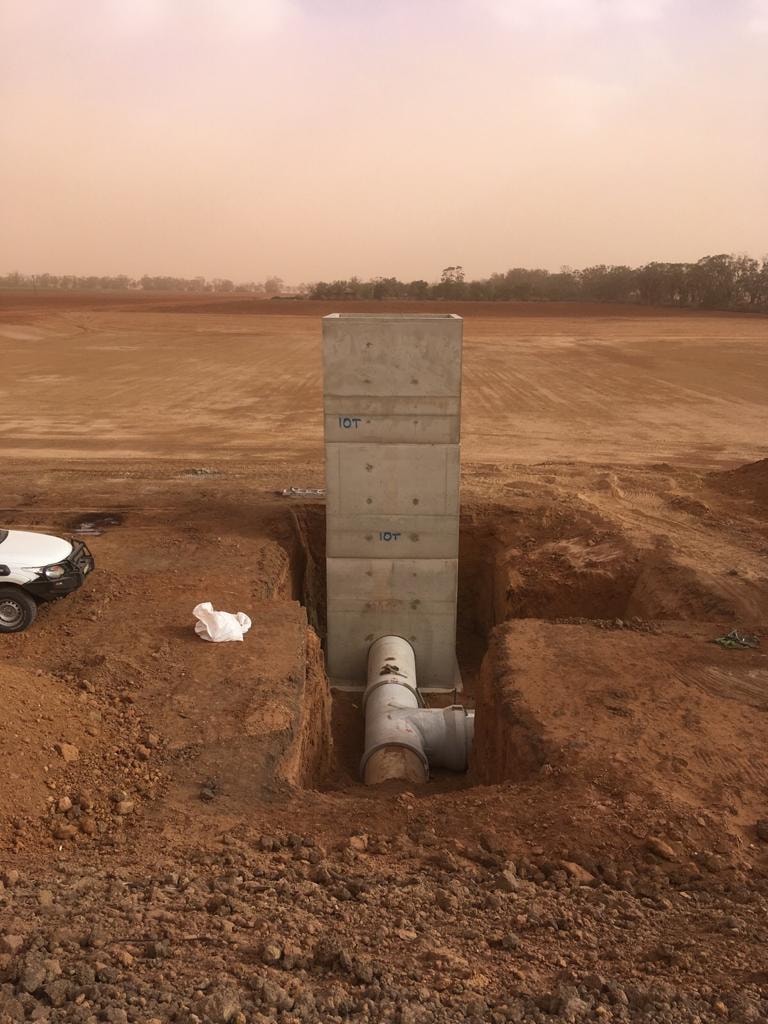
Start with a physical inspection of every bay outlet, drop box, headwall, and pit on your farm. You are looking for:
- Cracking or spalling — surface cracks in concrete are normal and usually cosmetic, but cracks that are wide, deep, or growing can indicate structural movement or reinforcement corrosion. Flag these for closer assessment.
- Undermining or settlement — check whether structures have moved or settled relative to the surrounding ground. A bay outlet that has tilted or sunk may not seal properly and can allow water to bypass the gate.
- Gate and slide condition — operate every gate through its full range of travel. It should move freely, seal cleanly when closed, and hold position when set. Stiff, corroded, or leaking gates are a common cause of water loss and should be replaced before the season.
- Apron and outlet erosion — check the concrete apron on the field side of bay outlets and drop boxes. Scour or erosion at the outlet can undermine the structure over time if not addressed.
- Debris and blockages — clear any silt, vegetation, or debris from inlets and outlets. A partially blocked inlet reduces flow capacity and increases the risk of erosion around the structure.
Check Your Gates and Slides
Gates and slides are the wearing components of an irrigation structure — they take the most punishment and are the most likely to need replacement. Check each one for:
- Corrosion — surface rust on steel gates is normal, but deep pitting or structural corrosion means replacement
- Seal condition — rubber seals harden and crack over time, reducing the effectiveness of the gate closure
- Stem and thread condition — the operating stem and thread should be clean, lubricated, and free of damage
- Frame condition — the gate frame embedded in the concrete should be secure and free of movement
Replacement gates and slides for standard Milcast bay outlets and drop boxes are available from our Finley facility. If you are unsure of the size or specification, bring the old gate in or send us a photo and we can match it.
Assess Structures That Need Replacement
If you have structures that are beyond repair — severely cracked, undermined, or simply worn out after decades of service — now is the time to plan their replacement, not when the water is running.
Lead times for precast concrete structures are typically short from our Finley facility, but during peak season demand can be high. Ordering in August or September for an October or November installation gives you the best chance of getting product when you need it.
When assessing whether to repair or replace, consider:
- Age — structures more than 40 years old that are showing significant deterioration are usually better replaced than repaired
- Repair cost vs replacement cost — for minor damage, repair is usually the right call; for major structural issues, replacement is often more economical over the long term
- Availability of spare parts — if the structure is non-standard or very old, spare parts may not be available, making replacement the only practical option
Order Early
This is the single most important piece of advice we can give. The irrigators who have the smoothest seasons are the ones who have ordered their replacement structures and gates in August and September, not the ones calling us in November when the water is already running.
Standard products — bay outlets, drop boxes, pit covers, pipes — are typically available from stock or with a short lead time. Custom or non-standard products take longer. If you have a non-standard requirement, contact us as early as possible to discuss options and lead times.
Talk to Your Irrigation District
Before you start any work on structures connected to a district channel, check with your irrigation district about their requirements for works approvals, inspection, and commissioning. Murray Irrigation, Murrumbidgee Irrigation, and Goulburn-Murray Water all have processes for approving works on their channel systems, and getting the approvals in place before you start saves time and avoids complications.
The Milcast Pre-Season Service
Our team in Finley is available to help with pre-season planning. If you have structures you are unsure about, we can advise on repair vs replacement, help you specify the right product, and give you an accurate lead time so you can plan your installation program.
Call us on (03) 5888 3051 or send an enquiry through our website. The earlier you call, the more options we have to help you.
Explore Topics
Written by
Milcast Team
Content creator and writer sharing insights and stories.