Water Allocations Are Tightening Again — Here''s How to Get More Out of Every Megalitre
When your allocation is capped, the water you do get needs to work harder. Here''s what on-farm irrigation infrastructure to review before the 2026–27 season.

If you farm in the Murray-Darling Basin, you don't need us to tell you that water allocations move around every year. But the start of the 2026–27 water year has again shown just how uneven things are across NSW and Victoria — some valleys opening near full, others leaving general security licence holders with next to nothing to start the season. For growers on the Murray and Murrumbidgee systems in particular, allocations have been building slowly, with water authorities prioritising reserves for higher-security needs before general security entitlements move.
What that means on the ground is simple: when your allocation is capped, the water you do get needs to work harder. That's where on-farm infrastructure — the outlets, dropboxes, and channel structures that control how water actually moves onto your paddocks — starts to matter as much as the allocation percentage itself.
Why Infrastructure Efficiency Matters More in Tighter Years
In a full-allocation year, a bit of seepage, an undersized outlet, or an inefficient channel structure is an inconvenience. In a year where general security sits well under 50%, the same inefficiencies are the difference between finishing a crop and not.
A handful of areas worth reviewing before your next irrigation season:
- Outlet sizing and placement — Are your bay outlets matched to current flow rates, or were they sized for a different cropping or allocation era?
- Channel-to-paddock loss — Old or damaged endwalls and dropboxes are a common (and often overlooked) source of water loss between the channel and the crop.
- Flexibility for variable years — Infrastructure that only performs well at full allocation isn't much use in a season like this one. Structures built for a range of flow conditions hold their value better over time.
What We're Seeing Change in the Region
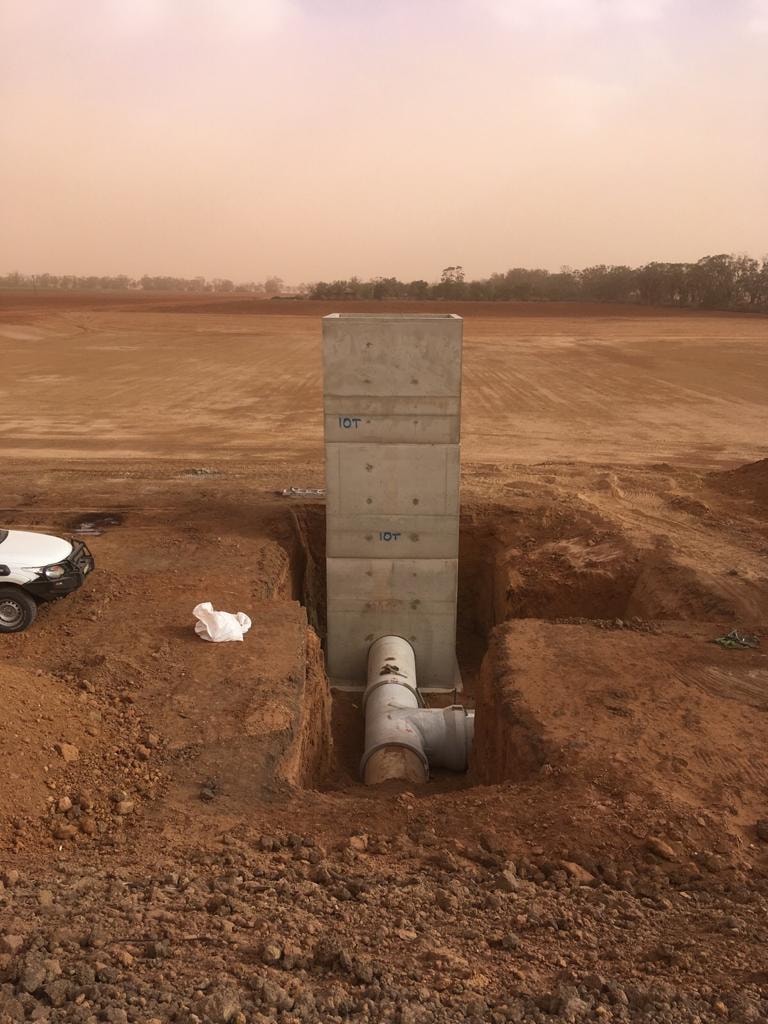
We've built and supplied precast irrigation infrastructure across the Riverina and southern NSW/northern Victoria for over 30 years, and the shift over the last few seasons has been noticeable. More growers are asking about:
- Driveable endwalls that hold up to farm traffic without compromising the water seal
- Large dropboxes designed for higher flow control in variable allocation years
- Bay outlets sized for efficient distribution when every megalitre is accounted for
These aren't new product categories for us — they're a direct response to what allocation conditions have been demanding of irrigation infrastructure across the Basin.
Planning Ahead of the Next Allocation Announcement
Water allocation updates come through progressively across the season as storage and inflow data changes. Rather than reacting once an allocation is locked in, many growers are now reviewing their on-farm water infrastructure in the off-season — before the pressure of a live cropping decision forces a rushed fix.
If you're planning ahead of the 2026–27 season and want to talk through what's worth reviewing on your property, get in touch with our team — we've been supplying irrigation infrastructure across the Murray-Darling Basin for three decades and understand both the products and the conditions they need to perform in.
Milcast Australia manufactures precast concrete irrigation and civil infrastructure from Finley, NSW, serving farms and water authorities across the Murray-Darling Basin.
Explore Topics
Written by
Milcast Team
Content creator and writer sharing insights and stories.