Why Automation and Data Are Becoming Essential to Modern Irrigation
Manual irrigation management has a hidden cost. As water tightens across the Basin, more growers are pairing decades of on-farm judgement with automated control and real flow data.

Farming has always run on judgement built up over years on the land — knowing when to open a gate, how long to run a bay, when a channel needs attention. That experience isn't going anywhere. But as water becomes tighter and more expensive to waste, more growers across the Riverina and southern Basin are pairing that judgement with automated control and real data, rather than relying on manual checks alone.
The Case for Automation On-Farm
Manual irrigation management has a hidden cost that's easy to underestimate: time and attention spent checking and adjusting gates, often at odd hours, across a property that might span multiple bays or fields. A few of the practical gains automated water control delivers:
- Fewer wasted megalitres — automated gates respond to preset flow and level targets, cutting the over-run and under-run that comes with manual timing
- Labour freed up for higher-value work — less time spent physically checking and adjusting structures across the property
- Remote visibility — knowing what's happening in a paddock without driving out to look
- Better record-keeping — automated systems generate the kind of flow and usage data that's increasingly useful for allocation planning, compliance, and season-to-season decision-making
Where Data Changes the Decision, Not Just the Labour
Automation isn't only about turning a manual task into a remote one — the real shift is in what you can see. Flow data captured over a season shows exactly where water is going, how long bays actually take to fill relative to plan, and where losses are creeping in. In a year where general security allocations are sitting well under full, that kind of visibility turns "we think this paddock is running efficiently" into a number you can actually check.
Milcast + Wisa Automation
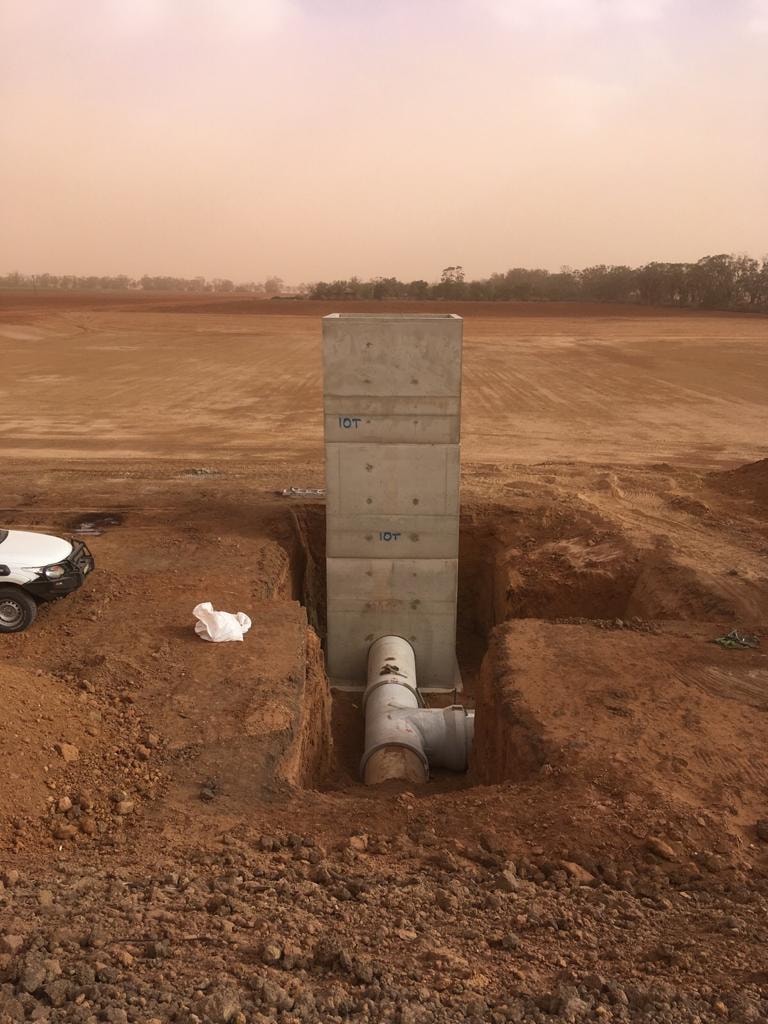
We partner with Wisa Automation to bring smart water control into the precast concrete structures we've been manufacturing for the Basin for over 30 years. Rather than treating automation as a bolt-on, our automation-ready structures are designed so that remote gate control, flow monitoring, and precision water management integrate directly with the outlets, dropboxes, and channel infrastructure already on your property.
What that partnership means in practice:
- Remote gate control — adjust and monitor water delivery without a site visit
- Automated water management — reduce manual labour on large-scale or multi-bay operations
- Integration with precast structures — automation built for the infrastructure, not retrofitted around it
- Support for precision water management — better data for tighter allocation years
Getting Started
You don't need to automate an entire property at once. Many growers start with the highest-traffic or hardest-to-reach structures on the farm, prove the value, then expand. If you're weighing up where automation could make the most difference on your property, talk to our team about how Milcast and Wisa Automation solutions can integrate with your existing — or planned — infrastructure.
Milcast Australia manufactures precast concrete irrigation and civil infrastructure from Finley, NSW, and partners with Wisa Automation to deliver smart water control across the Murray-Darling Basin.
Explore Topics
Written by
Milcast Team
Content creator and writer sharing insights and stories.